An automated entryway is a significant financial investment that instantly upgrades your property’s security and curb appeal. Yet, once the installation crew packs up their tools, many property owners treat their gate system like a static piece of fencing.
In reality, an automatic entryway is a heavy, highly dynamic piece of machinery operating outdoors under constant environmental stress. Every cycle forces massive metal leaves to move, drawing high electrical current and relying on tiny internal gears, microswitches, and bearings to coordinate flawless movement.
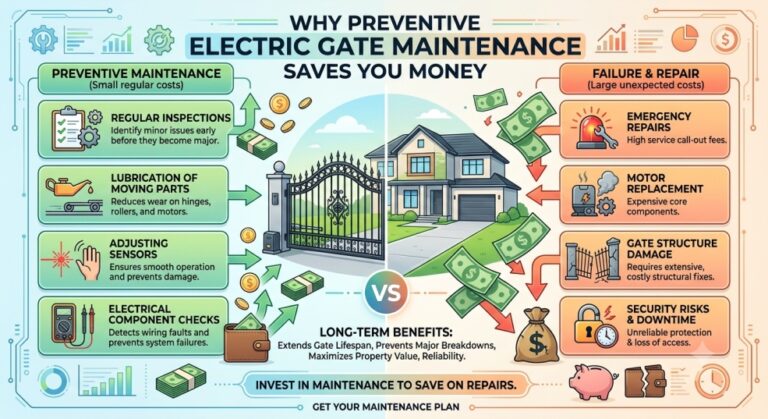
When you neglect this system, mechanical friction and electrical wear compound silently. What starts as a minor lubrication shortfall can rapidly cascade into a catastrophic motor burnout or structural failure. Implementing a proactive routine for electric gate maintenance is the single most effective way to eliminate unexpected operational downtime, shield your property from security vulnerabilities, and save thousands of dollars in emergency repair bills.
1. The Physics of Friction: Extending Your Motor’s Lifespan
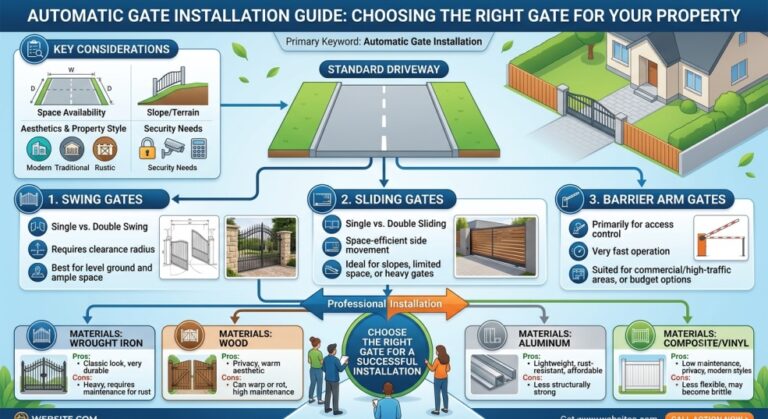
The mechanical heart of your automated entryway is its operator motor. Whether it drives a swinging hydraulic arm or spins a heavy chain to slide a steel frame, the motor is engineered to move a perfectly balanced, friction-minimized load.
Over months of exposure to rain, wind-blown dust, and temperature shifts, factory-applied grease naturally degrades, dries out, or turns into an abrasive paste packed with microscopic grit.
-
For Swing Gates: Dry hinge pins create intense binding resistance.
-
For Slide Gates: Dirt-caked drive chains and dry internal wheel bearings force the motor to work twice as hard to move the exact same distance.
When a motor encounters this level of resistance, its internal control board commands it to draw significantly more electrical current (amperage) to force the gate past the friction points. This extra electrical draw generates extreme heat inside the motor housing. Over time, this heat cooks the delicate copper windings and strips the internal nylon or brass gears.
Routine professional maintenance ensures these moving assemblies are thoroughly flushed of contaminants and recoated with application-specific industrial lubricants, keeping the motor’s workload low and adding years to its operational lifespan.
2. Preventing Electronic Failure and Moisture Intrusion
While the mechanical components fight physical friction, the electrical command system battles environmental exposure. Gate operator enclosures sit out in the elements year-round, making them prime targets for moisture, sudden electrical surges, and nesting pests.
The Hidden Threat of Condensation and Pests
External control boxes undergo rapid heating and cooling cycles between day and night, which naturally creates internal condensation. If the enclosure’s rubber seals are dry-rotted or cracked, moisture will coat the main logic board. This moisture leads to localized oxidation, rusting out delicate circuit traces and causing random short circuits that trigger “ghost openings” at odd hours.
Furthermore, insects and small rodents find the warm, weather-shielded interior of an electrical box incredibly inviting. Snails, spiders, and mice love to crawl behind the circuit board; their bodies can instantly bridge high-voltage connections, frying a $500 control board in a fraction of a second.
During a professional inspection, a technician tests the integrity of all weather seals, clears out pest debris, treats the circuit boards with specialized moisture-repelling dielectric compounds, and tightens electrical terminals that have vibrated loose over time.
3. Structural Re-Balancing: Catching Sag Before It Snaps
No matter how well your gate posts were originally set in concrete, the earth shifts. Soil expansion, heavy seasonal rains, vehicle vibrations, and natural settling can cause main support pillars to tilt by just a fraction of an inch over time.
Because an automatic gate leaf can weigh anywhere from 300 to over 1,000 pounds, even a microscopic structural lean creates an immense, uneven leverage load on the gate hardware.
The Hidden Toll of a Sagging Gate
A sagging gate leaf will begin to drag along the pavement or hit the catch post out of alignment. If a slide gate track warps or shifts, the internal drive chain or gear rack will bind up.
When a system operates out of plumb, the immense torque generated by the motor puts severe structural stress on the mounting brackets connecting the operator to the gate frame. If left uncorrected, this constant twisting force will crack weld points or shear mounting bolts completely out of the frame, turning a minor alignment correction into a major structural welding repair.
Maintenance ROI: Preventive Care vs. Reactive Repair Costs
| Service Component | Preventive Maintenance Approach | Reactive Failure Result | Potential Cost Variance |
| Mechanical Drivetrain | Deep-clean track, adjust chain tension, and apply marine-grade grease. | Chain snaps, strips the drive sprocket, and shears the internal gearbox shaft. | Save 70-80% compared to a full drive-assembly replacement. |
| Structural Balance | Laser-align hinges, check post plumb, and adjust gate limits. | Gate leaf sags, drags on the driveway, and rips mounting brackets off the welds. | Save 65% by avoiding emergency mobile welding and frame reconstruction. |
| Electrical Control Box | Inspect seals, clean pest debris, and test voltage/backup batteries. | Bugs short out the main logic board; dead batteries cause total system lockout during a power outage. | Save 60% by replacing single wear-and-tear components rather than entire circuit arrays. |
| Safety System Check | Clean and realign photo-eye sensors; test safety loop sensitivity. | Safety devices fail to detect an obstruction, resulting in vehicle impact or crushing injury. | Incalculable when factoring in property damage and legal liability risks. |
4. Keeping Mandatory Safety Systems Fully Compliant
Your automated entryway is a powerful machine capable of generating immense physical crushing force. To protect pedestrians, pets, and vehicles, modern systems feature advanced safety devices, including photoelectric eyes, edge sensors, and magnetic ground loops.
However, safety sensors are highly sensitive to everyday environmental wear:
-
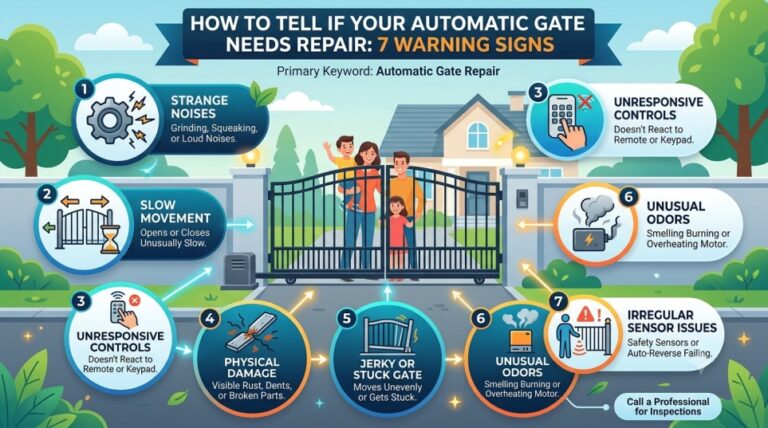
Photo-Eyes: Weed trimmers can bump their brackets out of alignment, or dirt, dust, and spiderwebs can coat the optical lenses, causing the gate to lock open.
-
Magnetic Ground Loops: Pavement shifts or heavy traffic can crack the sealant over loops buried in your driveway, allowing water to seep in and scramble the vehicle detector logic.
If a safety system fails or drifts out of calibration, the gate might ignore an active obstruction, closing directly onto a car panel or causing a severe safety hazard. Catching these calibration drifts early protects your family, visitors, and vehicles, while shielding you from substantial legal liability.
A standard part of a professional checklist includes verifying that all safety systems react instantly to simulated obstructions and recalibrating the internal force-limit settings on the control board.
5. Preserving Your Manufacturer’s Warranty Protection
Premium automatic gate openers come with robust manufacturer warranties that cover key components like the motor, gearbox, and logic board for several years. However, a look at the fine print reveals an important clause: warranties do not cover damage caused by neglect or lack of routine maintenance.
If your operator motor burns out because the hinges were completely dry and binding, the manufacturer can deny your warranty claim, categorizing the issue as user neglect.
By investing in a documented routine for electric gate maintenance, you create a verifiable service history. If a component does suffer a legitimate factory defect, you have the documentation required to ensure the manufacturer honors their warranty, saving you hundreds of dollars in parts replacement costs.
The Proactive Maintenance Checklist: What to Do and When
Monthly Property Owner Tasks (DIY Safety Checks)
-
Visual Sweep: Inspect the physical track or swing path. Clear away accumulation of dirt, gravel, leaves, or yard debris.
-
Acoustic Check: Stand near the gate while it cycles. Listen closely for any brand-new squeaks, grinding sounds, or unusual clicking.
-
Sensor Clean: Wipe down the outer casing of your photoelectric safety eyes with a soft, damp cloth to remove dust and spiderwebs.
Annual or Semi-Annual Professional Diagnostics
For standard residential systems, scheduling professional service once a year is ideal. For high-traffic commercial gate solutions, this service should occur semi-annually or quarterly.
-
Comprehensive internal component lubrication using industrial lithium and silicone formulas.
-
Digital multimeter load testing on primary power lines, transformers, and standby backup battery systems.
-
Complete mechanical re-leveling, gate tracking adjustments, and chain tensioning.
-
Logic board firmware checks, terminal tightening, and safety limit recalibrations.
Frequently Asked Questions (FAQ)
Can I save money by just lubricating the gate tracks and chains myself?
While sweeping your tracks and keeping them free of large debris is a great DIY task, blindly spraying generic grease onto chains and gears often backfires. Off-the-shelf lubricants attract dirt, sand, and grit, turning into an abrasive sludge that accelerates wear on your drive gears. Professional technicians use dry-film or marine-grade lubricants tailored to your specific environment.
My gate is working perfectly right now. Do I really still need to pay for maintenance?
Yes. The entire goal of preventive maintenance is to catch and resolve minor wear before it manifests as an operational breakdown. By the time a gate begins to stutter, stall, or grind, severe mechanical wear has already occurred, and you are likely looking at an expensive component repair rather than a simple maintenance check.
How do I know if my automatic gate’s backup battery is failing?
During your maintenance routine, technicians perform a load test on the battery. A clear warning sign of a weak or dying battery is a gate that runs noticeably slower when operating on battery power, or a system that completely fails to open during a localized power outage, forcing you to use the manual release key.
What is the typical lifespan of a well-maintained electric gate opener?
With consistent, professional care, a premium residential gate operator easily lasts 10 to 15 years. In high-cycle commercial settings, a well-maintained system generally delivers 7 to 10 years of reliable service before requiring a comprehensive internal rebuild. Neglecting maintenance can cut that lifespan in half.
Can irregular maintenance cause my access control system to fail?
Absolutely. Loose terminal connections, insect intrusion, or minor voltage drops can cause intercoms, card readers, and keypad entry paths to lag or stop responding entirely. Regular maintenance includes auditing your entire access control systems layout to ensure seamless data transmission.
Summary of Key Maintenance Takeaways
-
Friction Reduction: Keeping gears, chains, and hinges lubricated prevents motor overheating and gear stripping.
-
Environmental Defense: Regular inspections protect sensitive electronics from moisture damage, corrosion, and pest infestations.
-
Structural Alignment: Catching minor post sag prevents brackets from shearing off and tracks from binding.
-
Safety Compliance: Testing safety eyes and loops ensures active entrapment protection remains fully functional.
-
Financial Savings: A modest investment in routine tune-ups eliminates the need for expensive emergency calls and premature system replacements.
Protect Your Investment and Secure Your Entryway
Don’t wait for your automatic gate to lock you out or compromise your property’s perimeter security. Proactive care keeps your entry system running smoothly, safely, and predictably for years to come.
Partner with the certified team at BMS Automatic Gates to set up a comprehensive maintenance plan tailored to your specific system. From precision residential tuning to heavy-duty industrial inspections and professional automatic gate repair, we keep your automated entries performing perfectly.
Contact BMS Automatic Gates Today to schedule your comprehensive preventive maintenance service with an expert gate technician.